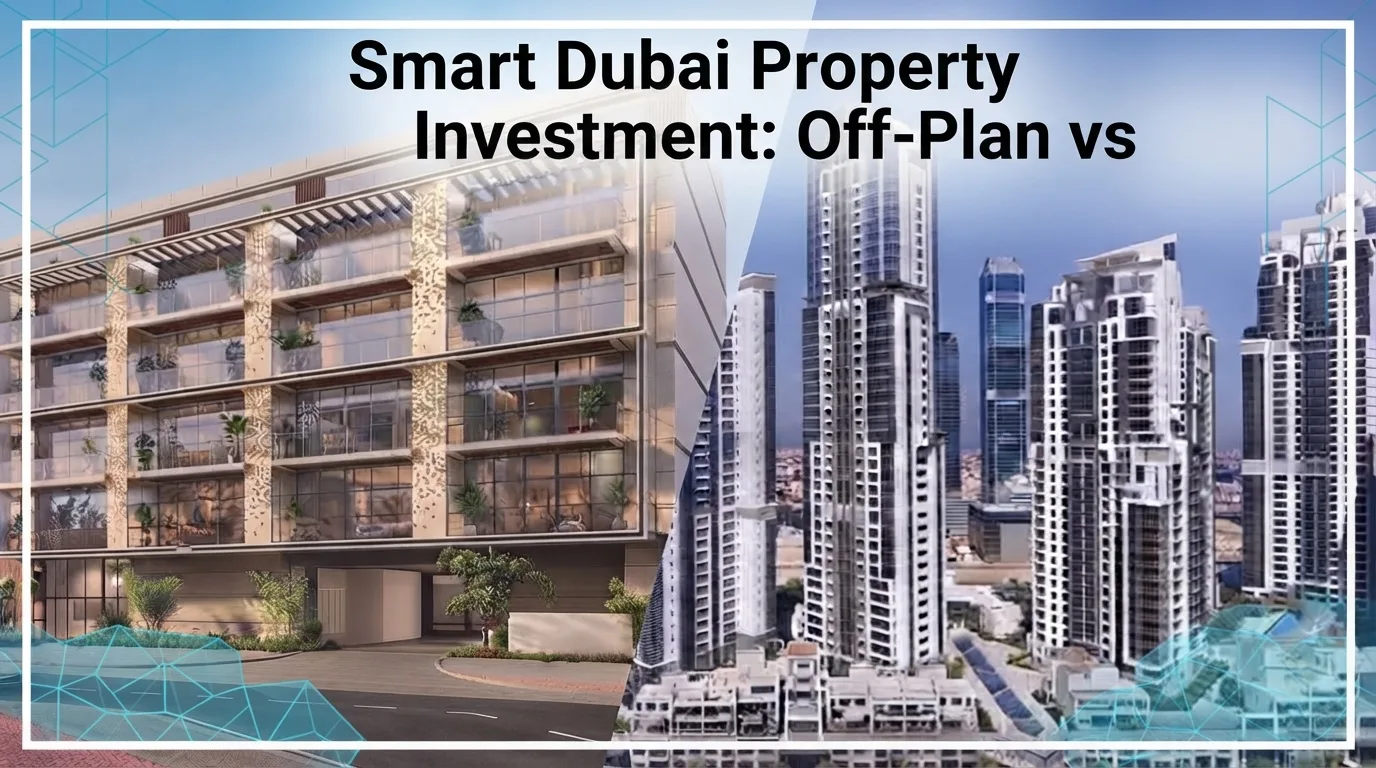
If you are exploring property options in Dubai, the key question comes down to Off-Plan vs Ready Property Investment. Should you buy a brand-new off-plan unit or a ready-to-move-in home?
At first glance, it seems simple. One is shiny and new, the other is move-in ready. But here is the catch: the real difference lies beneath the surface, and most investors do not find out until it is too late.
Let us break down 7 essential truths about Off-Plan vs Ready Property Investment that seasoned investors wish someone had told them earlier, so you can skip the regrets and start making money-smart moves instead.
1. Custom Design Freedom vs Instant Move-In Convenience
Here is the thing about ready-to-move-in properties—what you see is what you get. The layout, tiles, and kitchen finishes are all decided long before you walk in. Sure, it is convenient, but it leaves little room for creativity.
With off-plan properties, though, you get to play architect. Want an open kitchen instead of a closed one? Prefer a walk-in closet over an extra guest room? You can actually shape it your way. It is like building your dream home—minus the construction headaches.
2. Market Dominance of Off-Plan vs the Staying Power of Ready Homes
Here is an interesting fact — in the first half of 2025, off-plan properties made up about 70 percent of Dubai’s total residential transactions by value. That is a huge slice of the pie, clearly showing that more investors lean toward buying homes that are still under construction.
However, do not count out ready properties just yet. In some months, they make a strong comeback. For instance, during Q2 2025, ready properties accounted for around one-third of all deals — proof that many buyers still prefer homes they can move into right now.
3. Ready Properties: The Fast Track to Steady Rental Income
If you are someone who likes seeing returns now, ready properties in Dubai are your best friend. Unlike off-plan projects that might take years to complete, a ready home means you can start renting it out the moment you get the keys. No waiting, no construction delays, and no sleepless nights tracking project updates.
Did you know? The average rental yield for ready properties in Dubai is around 5.8%, and in some prime areas like Business Bay or Dubai Marina, it can even go higher. That is steady cash flow from day one.
4. Off-Plan Real Estate: High Growth Potential and Smart Rewards
It is no secret that off-plan property investment in Dubai has been on a strong rise, and investors are flocking to it for one main reason: growth potential. By mid-May 2025, off-plan real estate sales had already reached an impressive AED 90 billion (~USD 24.5 billion), making up about 38% of Dubai’s entire property market.
Even more interesting, in H1 2025, the average price of off-plan properties was around AED 2.9 million, slightly higher than ready properties at AED 2.7 million. That tells you investors are willing to pay more for projects that promise appreciation and flexible payment options.
5. Uncovering the Real Price Gap Between Off-Plan and Ready Units
Here is something many new investors overlook. Off-plan properties in Dubai often come with a built-in premium, especially in high-demand areas. Developers know buyers are drawn to the excitement of "new," and that confidence shows in the pricing.
In hotspots like Downtown Dubai, Business Bay, and Palm Jumeirah, off-plan prices per square foot can be 20 to 30 percent higher than ready properties, even before you factor in incentives like flexible payment plans.
6. Choosing the Right Property Type and Hotspot Location
Not all off-plan or ready properties in Dubai perform the same way. What you buy and where you buy it can completely change your returns.
When it comes to off-plan property investment, apartments clearly take the lead. In fact, around 76 to 90 percent of off-plan sales are flats, while villas make up only a small fraction. Meanwhile, mature districts such as Dubai Marina, Business Bay, and Palm Jumeirah continue to shine for ready properties due to their established demand.
7. Market Shifts Ahead: What Every Smart Investor Should Watch
Dubai’s property market has been booming, but there are early signs that things might be leveling off. Something every investor should keep in mind, especially if you are focused on off-plan property investment, is future supply.
According to Fitch Ratings, property prices could dip by up to 15 percent between late 2025 and 2026 due to a surge in supply. In fact, reports show 93,000 new units are entering the market this year alone, mostly apartments, which could put downward pressure on rents and resale values.
Which Option Might Fit You Best?
Here is a quick comparison table to help you judge which route might suit your priorities:
| What You Value Most | Off-Plan Properties Dubai | Ready Properties Dubai |
|---|---|---|
| Capital Appreciation Potential | High — if market stays strong, location is good, developer reliable | Moderate — already factored in much value |
| Immediate Income | None or very little until handover / rentals begin | Yes — rent out immediately |
| Risk of Delay / Defaults | Higher — regulatory, developer, construction risk | Lower — property already exists |
| Upfront Investment Cost | Lower initial cash, flexible payment plans | Higher initial cost + possibly higher fees |
| Price Premium / Pricing Certainty | More variable, includes future uncertainties | More certain — you can inspect, evaluate condition |
| Stability in Downturns | More exposed to market corrections | More insulated — location, condition, rental demand help maintain value |
Final Verdict: Making Your Ultimate Choice
Dubai’s property market is full of opportunity, but the key question every investor faces is whether to choose off-plan or ready property. Choosing the right path can mean the difference between massive profits and regret-filled mistakes.
Your smartest move depends on your budget, risk tolerance, timeline, and preferred areas. Whether that is Business Bay, Palm Jumeirah, or beyond. Take your time, weigh your options, and pick the strategy that aligns best with your long-term financial goals.